
Why People Are Moving to Calgary and Edmonton (2026)

Why Are So Many People Moving to Calgary and Edmonton? What the Numbers Say About Alberta Housing (2026)
Calgary and Edmonton keep coming up in conversations about housing. People ask why so many are moving there, and what that means for the mortgage side.
This post sticks to what official sources say. It is information only, and it does not tell anyone where to live or buy.
What the Population Numbers Show
Alberta had the strongest population growth among Canada's four largest provinces in the second quarter of 2026. It also had the strongest net inflow of people from other provinces of any province. In plain terms, more people moved into Alberta from other parts of Canada than into anywhere else.
More temporary residents left Alberta than arrived, but by a smaller margin than in the first quarter. That group includes people on student and work permits. The overall growth comes from other sources, including people moving in from other provinces.
"A trend across a whole province does not tell you what will happen to any one neighbourhood or home."
What CMHC Says About the Prairies
CMHC's 2026 housing market outlook says Prairie markets will likely lead price growth because demand remains strong in that region.
CMHC's Summer 2026 outlook forecasts an average MLS price of $650,000 in Calgary and $460,000 in Edmonton for 2026.
In plain terms, those are city-wide forecasts, not the price of any one home. That is a forecast, not a promise. Forecasts get updated as new data comes in.
One Difference People Notice: Closing Costs
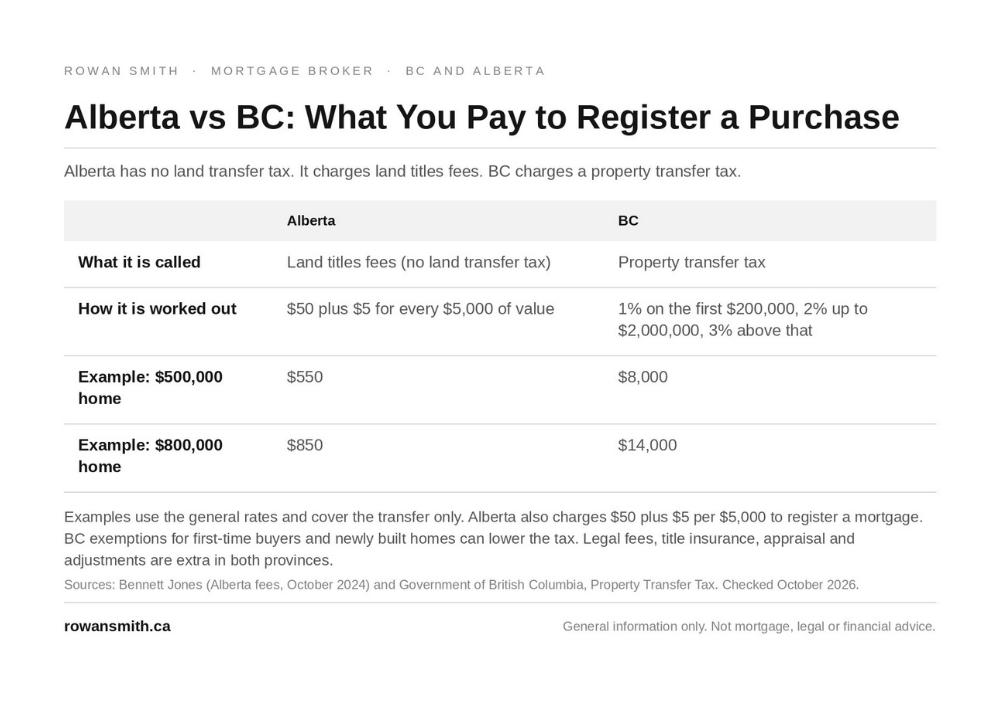
Another thing people compare is how closing costs are built. Alberta charges land titles fees instead of a land transfer tax.
We break down how those fees work, and how they compare to BC, in a separate post.
What This Means on the Mortgage Side
More movement between provinces means more people selling in one place and buying in another. That can involve two lawyers, two sets of closing costs, and timing between a sale and a purchase.
Lenders look at the same core things in Alberta and BC: income, credit, down payment or equity, and the property itself. The local market and the type of property can change how a file is viewed.
Worth knowing: population and housing forecasts change quarter to quarter. The sources linked below publish updated data, and it is worth checking them for the latest figures.
Where Rowan Works
Rowan is licensed in both BC and Alberta. He works with clients in Calgary, Edmonton, and across Alberta, as well as Vancouver and the Lower Mainland.
That includes people who are moving between the two provinces and need to line up a sale and a purchase.
Moving between BC and Alberta, or already in Alberta and thinking about a mortgage?
Talk to Rowan about how the process works in each province.